
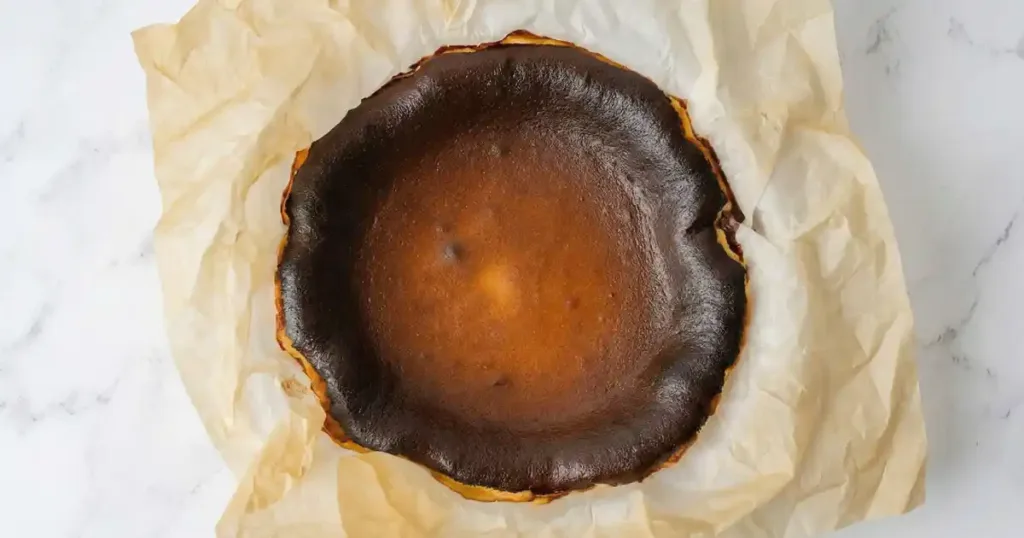
If there is one dessert I always recommend when someone tells me they are scared of baking cheesecake, it is this Basque Burnt Cheesecake. It looks rustic, feels relaxed, and somehow turns five simple ingredients into the creamiest, most unforgettable dessert. This recipe was first shared back in 2021, and after many reader questions, kitchen tests, and family taste checks, I have updated it with extra tips, clearer instructions, and helpful flavor ideas.
Yield: 8 servings
Total Time: About 5 hours (10 minutes prep, 40–50 minutes baking, 4 hours chilling)
A Cheesecake That Doesn’t Need Perfection
Back in the early days of home baking blogs, cheesecake felt like a serious project. Water baths, cracked tops, complicated steps, and that quiet fear of opening the oven door too soon. This Basque cheesecake is the opposite of all that.
- There is no crust.
- There is no water bath.
- There is no need for fancy equipment.
You mix everything in one bowl, pour it into a pan lined with parchment paper, bake it hot, and let the oven do the work.
And here is the best part. The cheesecake is supposed to look a little messy. The dark top, wrinkled sides, and puffed center are exactly what make it beautiful. Instead of chasing perfection, you simply bake and enjoy.
What Makes Basque Cheesecake Special
This cheesecake comes from the Basque region in northern Spain and is sometimes called San Sebastián cheesecake. A small restaurant called La Viña made it famous, and once you taste it, you understand why people travel just to try a slice.
Unlike traditional cheesecake, this one is baked at a very high temperature. The top caramelizes deeply while the inside stays soft and creamy. When it comes out of the oven, it looks almost overbaked, but that is the secret. After chilling, the center becomes smooth, rich, and perfectly set.
Think of it as the cozy sweater version of cheesecake. Relaxed, comforting, and always welcome at the table.
Equipment You Will Need
You do not need anything complicated here, which is another reason busy parents and beginner bakers love this recipe.
- Digital kitchen scale
- Electric hand mixer or stand mixer
- Rubber spatula
- Digital oven thermometer (very helpful)
- 8-inch / 20 cm springform pan
- Parchment paper
A quick kitchen tip from experience: weighing ingredients gives the best results. Baking really works best when measurements are precise.
Ingredients
You only need five ingredients, and each one matters.
- 670 g (3 cups) full-fat cream cheese, room temperature
- 200 g (1 cup) granulated sugar
- 30 g (¼ cup) all-purpose flour
- 4 large eggs, room temperature
- 300 g (1⅓ cups) heavy cream, room temperature (36–40% fat)
Ingredient Notes From My Kitchen
Take everything out of the fridge ahead of time. Room-temperature ingredients blend smoothly and help the cheesecake bake evenly.
Use full-fat cream cheese and heavy cream. This is not the moment for low-fat substitutes. The creamy texture depends on the richness.
Yes, the flour amount is correct. It is only there to give the cheesecake enough structure without making it dense.
I intentionally keep this recipe simple. No vanilla, no extra flavors at first. Try it plain once so you can really taste what makes Basque cheesecake special.
Step-by-Step Instructions
Prepare the Pan
Preheat your oven to 220°C / 430°F using regular heat without the fan.
Line an 8-inch springform pan with two large squares of parchment paper. Let the paper rise about 2 inches above the rim. Do not smooth it out. Those wrinkles create the signature rustic look.
Mix the Batter
Place the cream cheese in a large mixing bowl.
Start mixing on low speed and slowly add the sugar and flour. Keep the mixer gentle. You are blending, not whipping. The batter should become smooth and creamy without adding too much air.
Add the eggs one at a time while mixing on low speed. Let each egg fully combine before adding the next.
Slowly pour in the heavy cream and mix just until the batter looks silky and uniform.
That is it. One bowl. Five ingredients. Done.
Fill the Pan
Pour the batter into the prepared springform pan. Tap the pan lightly on the counter to remove air bubbles.
Bake the Cheesecake
Place the cheesecake in the oven and bake for about 40 minutes. Begin checking around the 30-minute mark.
You are looking for three signs:
- The top is dark and caramelized
- The edges look set
- The center still jiggles slightly
If the top browns too quickly, loosely cover it with aluminum foil. But remember, this is a burnt cheesecake. Do not panic about the color. That deep caramelization creates amazing flavor.
Cool and Chill
Remove the cheesecake from the oven and let it cool completely in the pan. Resist the urge to remove it early. Warm cheesecake is fragile and may collapse.
Once cooled, cover the pan with plastic wrap and refrigerate for at least 4 hours. Overnight chilling works beautifully too.
The cheesecake finishes setting in the fridge and becomes incredibly creamy.
Serve
Carefully release the springform pan and gently peel back the parchment paper. Slice with a sharp knife and serve slightly chilled or after sitting at room temperature for about 20 minutes.
Helpful Baking Tips From Experience
- Bring cream cheese, eggs, and cream to room temperature before mixing.
- Use high-quality ingredients. Simple recipes depend on good basics.
- Do not reduce the sugar. It helps create the caramelized top.
- Add the flour at the beginning so it blends smoothly.
- Aim for slightly underbaked rather than overbaked. The center should jiggle when you remove it from the oven.
- Let the cheesecake chill fully before removing it from the pan.
- Every oven behaves differently, so an oven thermometer helps ensure the high temperature needed for that signature top.
Storage Tips
I never expect leftovers, but just in case:
Store the cheesecake covered in an airtight container in the refrigerator for 1 to 2 days. Keep it well covered so it does not absorb other fridge smells.
Freezing is not recommended. The texture changes and loses its creamy quality.
Flavor Ideas to Try Later
My honest advice is to taste the cheesecake plain first. The caramelized top and creamy center already have incredible flavor.
After that, you can experiment with:
- Fresh strawberries or raspberries
- Lemon or orange zest
- Matcha powder
- Chocolate chips
- Real vanilla extract
A small spoon of crème anglaise or a glass of dessert wine also pairs beautifully.
Nutrition Information (Per Serving)
- Calories: 562 kcal
- Carbohydrates: 34 g
- Protein: 9 g
- Fat: 45 g
- Saturated Fat: 26 g
- Polyunsaturated Fat: 2 g
- Monounsaturated Fat: 12 g
- Trans Fat: 0.01 g
- Cholesterol: 209 mg
- Sodium: 305 mg
- Potassium: 181 mg
- Fiber: 0.1 g
- Sugar: 29 g
- Vitamin A: 1795 IU
- Vitamin C: 0.2 mg
- Calcium: 119 mg
- Iron: 1 mg
Disclaimer: Nutrition facts are estimated using online tools and may vary based on your ingredients and preparation. Please consult a nutritionist for precise dietary advice.
This Basque Burnt Cheesecake is truly one of those recipes that feels almost too easy for how impressive it turns out. It comes together in minutes, fills the kitchen with the smell of caramelized cream, and always brings people back for another slice. It is the kind of dessert you make once and then keep forever in your family recipe collection.